✨ Efficacy Guarantee: BetterLife performs best the more detail you provide and the more often you update your progress (feelings, physically & mentally).

What You Eat Shapes How You Feel: The Food and Mood Connection

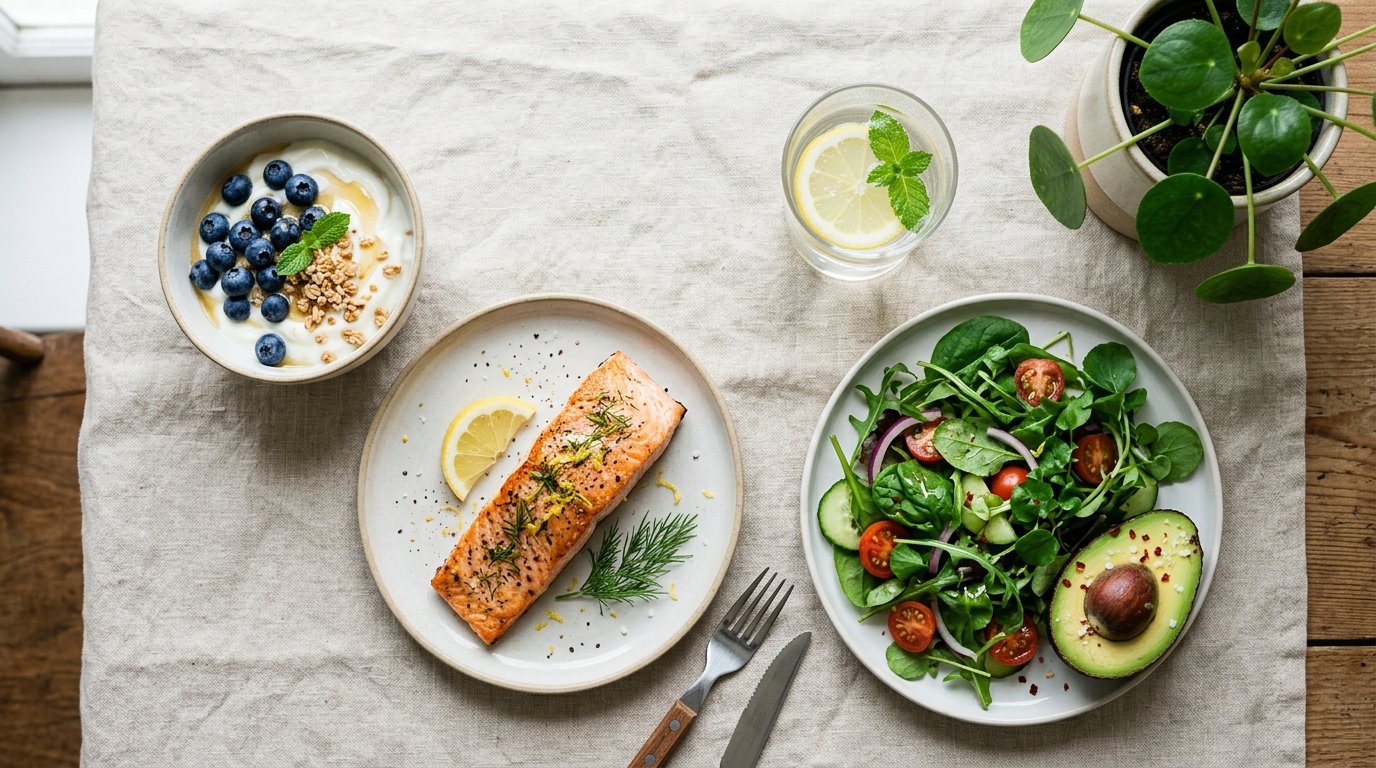
Fresh whole foods showing the food and mood connection

Your mood is not just a brain event. It is built from the food you eat. The connection between diet and mental health is real and measurable, and improving what you put on your plate is one of the most practical tools you have for feeling steadier, calmer and more resilient on a daily basis.

Why this matters

Most of us treat mental health as something that happens entirely in the head. But roughly 90 to 95 percent of the body’s serotonin, the chemical most closely tied to mood and well-being, is produced in the gut rather than the brain (Caltech, 2015; PMC7659911). The microbes living in your digestive tract help regulate that production. That means the choices you make about food every day change your mood in ways you can actually notice, often faster than you expect.

What the science says

Three findings from the research show how strong this link is:

  • Serotonin is made in the gut. An estimated 90 to 95 percent of the body’s serotonin is produced by enterochromaffin cells in the gastrointestinal tract, and gut bacteria help drive that process (Caltech, 2015; PMC7659911).
  • Diet patterns track with depression risk. In a systematic review, 85 percent of the observational studies found that a Mediterranean-style diet was associated with lower depression risk, and the intervention trials echoed that finding (ScienceDirect, 2019).
  • Refined sugar is linked to worse mood. A Harvard Health review notes that diets high in refined sugars correlate with impaired brain function and worsening of symptoms of mood disorders (Harvard Health).

None of this means food is a magic cure. It means food is a lever. And a lever you can pull three times a day is worth pulling.

The food-mood checklist

You do not need to overhaul your entire diet. Make one or two changes and build from there:

Change you can try todayWhy it helps
Add a serving of fermented food (yogurt, kefir, sauerkraut)Supports the gut bacteria that help regulate serotonin production
Eat fish rich in omega-3 at least twice a weekOmega-3 shows a small but significant effect on depression symptoms
Swap a refined carb for a whole grain (oats, brown rice)Steadier blood sugar means steadier mood through the day
Put vegetables and fruit at the center of lunchMediterranean patterns are associated with lower depression risk
Cut one sugary drink a dayLess refined sugar is linked to fewer mood dips

One concrete action for today

Do one thing tonight, not ten. Eat a bowl of yogurt with berries, or swap your afternoon soda for water with a slice of lemon. Keep it small and repeatable. The food-mood connection works through consistency, not perfection. A single good day does not change your mood, but a month of small good days shows up clearly in how you feel.

FAQ

Q: How long does it take for diet to change mood? A: Most people notice steadier energy and mood within a few weeks of consistent dietary change, though individual results vary with the specific food and the person.

Q: Do I need supplements to improve mental health through diet? A: You do not need supplements. Whole foods deliver the nutrients the gut and brain need, and research on isolated supplements such as omega-3 shows modest effects compared with an overall healthy eating pattern.

Q: Can food replace professional care for depression or anxiety? A: No. Diet is a support, not a replacement. If you are managing a diagnosed condition, keep working with your provider and treat food as an addition to treatment, not a substitute.

Q: What is the single biggest dietary change? A: Cutting highly processed and refined-sugar foods while adding whole foods such as vegetables, fruit, fish and fermented foods delivers the broadest benefit for mood.

Q: Is the food-mood effect the same for everyone? A: No. Genetics, gut bacteria and stress all change how food affects your mood, which is why tailoring your choices beats copying someone else’s diet.

References

  • Caltech (2015): Microbes help produce serotonin in the gut, Nature Cell
  • PMC7659911: Serotonin synthesis in the gastrointestinal tract
  • ScienceDirect (2019): Mediterranean dietary pattern and depression risk, systematic review
  • Harvard Health: Nutritional psychiatry, your brain on food
BetterLife Hub

How to Use BetterLife

Welcome to the interactive manual. Expand the sections below for a progressive, step-by-step guide explaining exactly how to use every button, menu item, and diagnostic tool in the iOS app.

💬 1. The Coaching Interface
A/A
The Coach Switcher
Concept
A dynamic neural engine toggle allowing you to switch AI personalities mid-session.
How to use
Tap the top banner spanning the chat screen. Select either "Aria" or "Aeron" from the dropdown overlay.
Purpose
Switch to Aria when experiencing anxiety or shame to receive empathetic, validating coaching. Switch to Aeron when you need blunt, no-nonsense accountability and high-output execution.
Troubleshooting: If the coach's tone doesn't change immediately, verify your 'Communication Tone' toggle in the Profile Settings is not overriding the archetype.
🎙️
Voice Dictation (Microphone)
Concept
Offline, privacy-safe speech-to-text journaling.
How to use
Press and hold the microphone icon located in the bottom chat input bar. Speak your thoughts naturally, then release to send.
Purpose
Typing requires executive function. When you are emotionally exhausted, dictating your feelings verbally removes the friction of journaling, allowing the AI to capture raw emotional context.
Troubleshooting: If transcription fails, open iPhone Settings > Privacy & Security > Speech Recognition, and ensure BetterLife has active permission. Ensure you have downloaded offline dictation packages.
🚨
The SOS Button
Concept
An emergency circuit breaker for severe task paralysis.
How to use
Tap the red SOS icon during any active chat session.
Purpose
When you are completely frozen by executive dysfunction, standard motivation fails. The SOS button overrides the chat and forces a 120-second Fogg Behavior Model timer, breaking your massive task down into an atomic, 2-minute micro-action (e.g., "Just open the laptop").
🧠
CBT Thought Record
Concept
A guided cognitive distortion logger.
How to use
Tap the brain icon. Select the distortion you are experiencing (e.g., Catastrophizing, Black-and-White thinking) from the list, and answer the AI's rational reframing prompts.
Purpose
To systematically dismantle overwhelming, irrational negative thoughts before they prevent you from taking action on your goals.
🎯 2. Goals & Progress Tracking
+
Add Goal Button
Concept
Structural objective creation tool.
How to use
Navigate to the Goals tab and tap the '+' button in the top right. Define your target, assign a Horizon timeframe (Daily, Weekly, Monthly), and select a Domain (Health, Career, etc.).
Purpose
Goals provide the AI coach with a "North Star". The AI actively references these active goals during your daily chat sessions to ensure your micro-tasks align with your macro-ambitions.
📋
Goal Cards (List View)
Concept
Interactive progress and obstacle trackers.
How to use
Tap any active Goal Card in the list. Use the slider to log progress percentage, or tap "Flag Obstacle" to mark it as blocked.
Purpose
Directly updates your session memory. When you flag a goal as blocked, the AI coach will instantly recognize this in your next chat and proactively help you troubleshoot the blockage.
⚙️ 3. Profile & Diagnostics Settings
🌍
Cultural Context Menu
Concept
A 15-region AI cultural alignment calibrator.
How to use
Navigate to Settings and select your preferred region (e.g., US, UK, DE, JP, BR) from the dropdown list.
Purpose
Different cultures respond differently to motivation. Changing this fundamentally alters the AI's output tone (e.g., US scaling vision vs Japanese Kaizen vs German pragmatism) to match your expectations.
❤️
HealthKit Sync Toggle
Concept
Local physiological data integration.
How to use
Toggle the switch to ON. You will be prompted by iOS to grant read-only access to Sleep, Resting Heart Rate, and HRV.
Purpose
If you are physically exhausted, the AI coach will detect the low biometric recovery and automatically dial down task complexity to protect you from burnout.
Troubleshooting: If data isn't syncing, open the Apple Health app, go to Sharing > Apps, and ensure BetterLife has active read permissions.
🗑️
Data Sovereignty (Delete Button)
Concept
The GDPR-compliant emergency kill switch.
How to use
Scroll to the absolute bottom of the Profile page. Tap the red "Delete all my data" button and confirm the prompt.
Purpose
Instantly invalidates all local sandbox encryption keys, permanently erasing your chat logs, goals, and metrics with zero server retention.

Select a category to view high-status client-side support answers:

💳 Subscriptions & App Store Refunds
BetterLife handles all payments securely using Apple StoreKit 2. To update, cancel, or request refunds for subscriptions:

1. Open the App Store application on your iPhone.
2. Tap your profile image in the top-right.
3. Go to **Subscriptions** -> select BetterLife to cancel.
4. To request a refund, go to [reportaproblem.apple.com](https://reportaproblem.apple.com) directly. BetterLife has zero custody of payment tokens.
🧠 GDPR Erasure & sandbox Wiping
Under GDPR Article 17, you hold physical sovereignty over your database. To permanently delete all session logs, streaks, and focus metrics:

1. Navigate to your **Profile Dashboard** inside the iOS app.
2. Scroll down and tap **"Delete all my data"**.
3. Confirm the prompt. The app instantly invalidates the on-device sandbox encryption keys. This is immediate, irreversible, and requires 0% human verification.
Auto-Bundled Client Diagnostics
Loading environment payload...

Ticket Dispatched

Your anonymized ticket has been secure-routed to our edge processing desk. A representative will contact you shortly under a zero-tracking secure correspondence.