 Better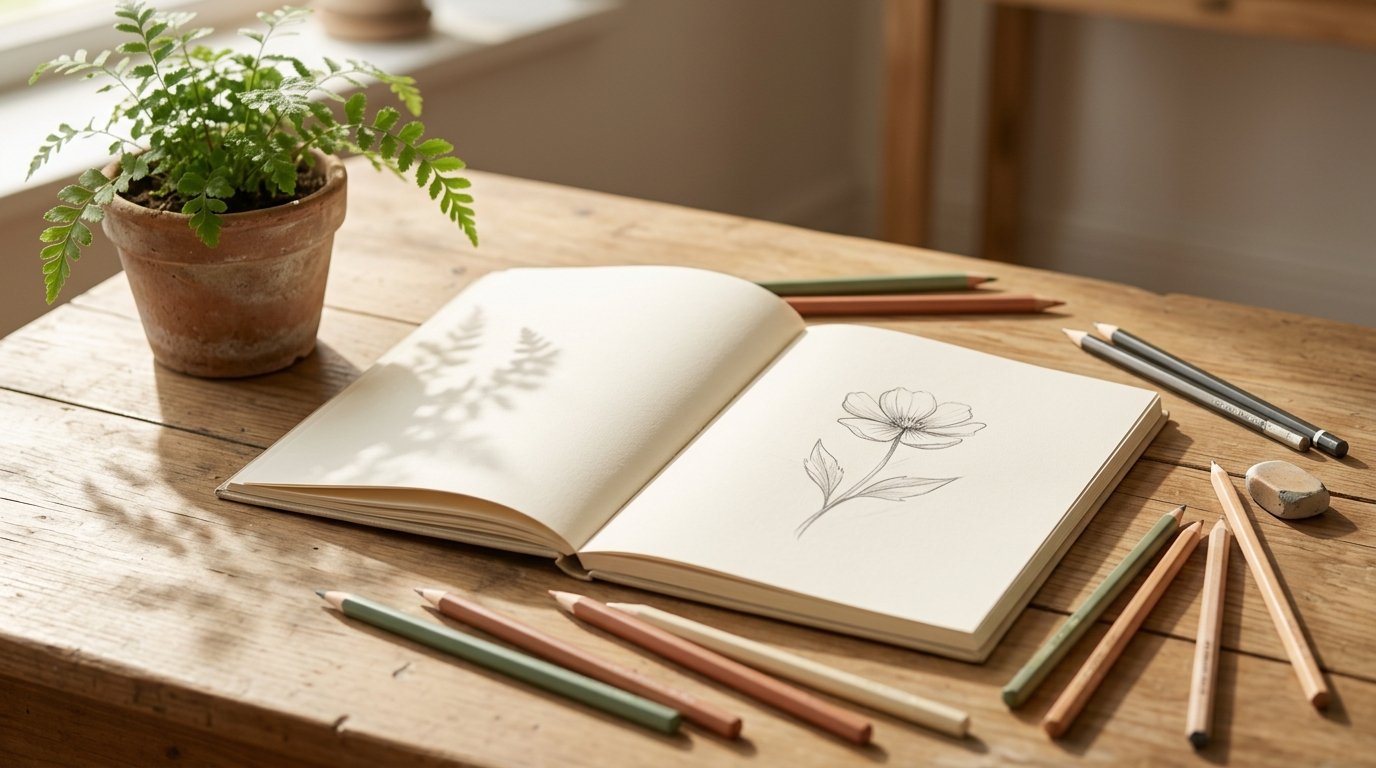
You don’t need talent to get the mental health payoff of creativity. A five-minute daily creative practice lowers stress, lifts mood, and quiets the inner critic, and the research is clear about why. Let this post walk you through the science and give you one small habit you can start today, no art skills required.
Why a Tiny Creative Habit Works
Creativity is not a luxury for artists. It is a basic brain function that calms your nervous system. When you make something with your hands or your words, you enter a state that psychologist Mihaly Csikszentmihalyi called flow. In flow, self-consciousness fades, time distorts, and the internal critic goes quiet. People in flow report relief from rumination and lower anxiety. That alone explains much of the benefit.
The numbers back it up. A July 2023 Healthy Minds poll from the American Psychiatric Association surveyed 2,202 American adults and found that 71% of people who rated their mental health very good or excellent engaged in creative activities regularly, versus 50% of those reporting good mental health and just 46% of those reporting fair or poor mental health. The link between making things and feeling better is consistent.
Longitudinal work makes the case even stronger. In a 12-year study published in 2020, researchers following older adults found that people with depression who took up a hobby had 272% higher odds of recovering, while those without depression who started a hobby had 32% lower odds of developing it. Creativity is not a distraction from wellbeing. It is one of the more reliable roads to it.
| Activity | Approx. time to a measurable effect | What the research shows |
|---|---|---|
| Art-making (drawing, painting, collage) | 45 minutes | Significant drop in cortisol, the stress hormone |
| Journaling / free writing | 5-10 minutes | Lower anxiety, better mood, clearer thinking |
| Pattern drawing or coloring | As little as 5 minutes | Reduced anxiety, calm, focus |
| General creative hobby | Weekly | Lower depression and anxiety, higher life satisfaction |
What Counts as Creative
Broaden your idea of what creativity is. It is not just painting and poetry. Gardening, cooking a new recipe, rearranging a bookshelf, taking photos with your phone, doodling in a meeting, knitting, playing with a child, writing a silly caption, or picking a theme for your desk all count. The research does not care how good the result is. It cares that you are engaged, present, and making something that did not exist before. That act is what settles your nervous system.
Your 5-Minute Reset
Here is one concrete habit to try today. Set a timer for five minutes. Pick one simple thing: sketch a flower you can see, write three sentences about your day, or fold a paper crane. Do it slowly, with your full attention. When your mind wanders to your to-do list, gently return it to the motion and the color and the words in front of you. No judging the outcome. No posting it anywhere. This is for you.
Repeat it at the same time each day and it becomes a habit. Try it right after your morning coffee, or as a wind-down before bed. Five minutes is a low enough ask that it survives stressful days, which is exactly when your nervous system needs it most.
Make the Habit Stick
- Tie it to a trigger. Refill your coffee, then sketch for five minutes.
- Keep the supplies visible. A pen and paper on the kitchen counter beats a drawer.
- Start absurdly small. Five minutes is already small, so do not shrink it further.
- Ditch the camera. The moment you create for an audience, the critic comes back.
FAQ
Q: I am not creative or artistic. Will this still help? A: Yes. The benefits come from the act of focused making, not from quality. Research on flow shows that absorption, not talent, is what quiets rumination and anxiety. Drawing a wobbly flower works as well as painting a masterpiece.
Q: How long does a creative practice need to be to help my mental health? A: Minutes are enough. Pattern drawing and coloring reduce anxiety in as little as five minutes, and art-making lowers cortisol within about 45 minutes. Consistent small sessions beat occasional marathons.
Q: What counts as a creative activity for stress relief? A: Anything you make that did not exist before: gardening, cooking, journaling, doodling, photography, knitting, playing music, even rearranging a shelf. The action matters, not the medium.
Q: When is the best time of day to do a five-minute creative habit? A: Any time you can be consistent. Morning works well as a calm start, and evening works as a wind-down. Pick a trigger you already do daily and attach the practice to it.
Q: Can creativity actually help with anxiety or low mood, or is it just a distraction? A: It is more than a distraction. In a 12-year study, people with depression who took up a hobby had 272% higher odds of recovery, and people without depression had 32% lower odds of developing it. The calming effect is reliable and well documented.