 Better
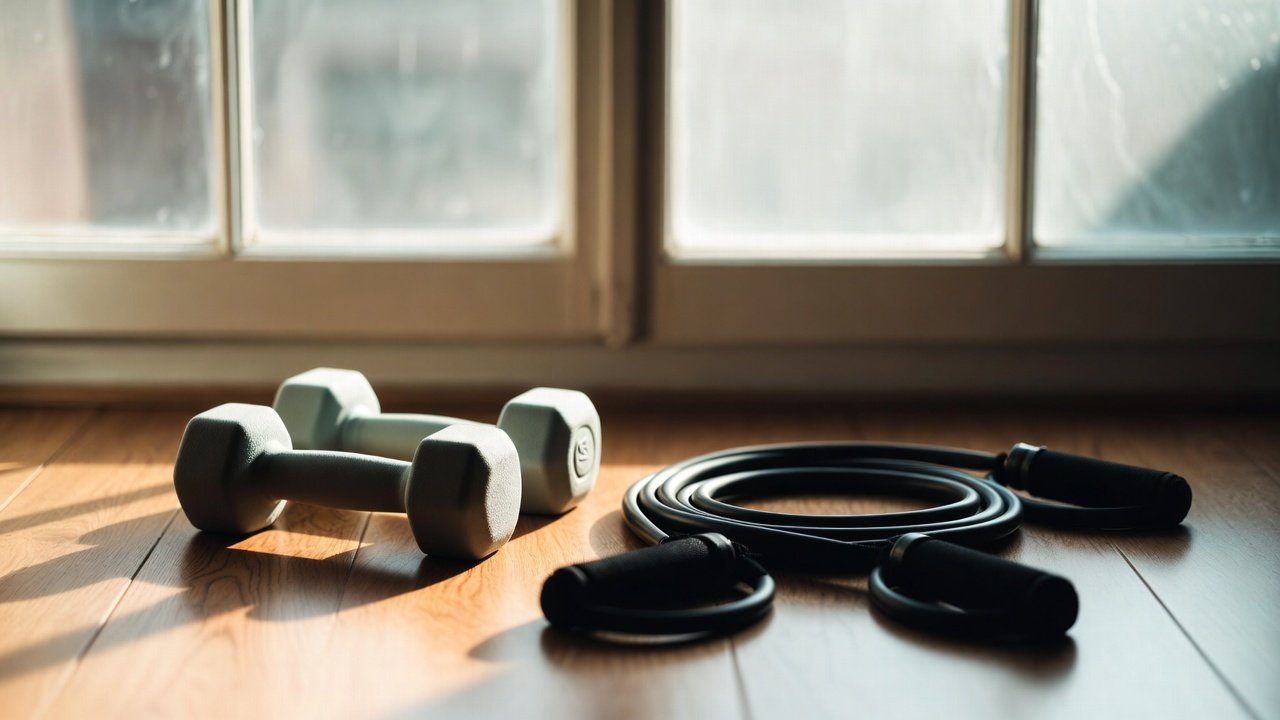
Strength training lowers anxiety. A 2017 meta-analysis of 16 randomized trials found resistance exercise training reduced anxiety symptoms by a moderate amount, and the effect was roughly twice as strong in otherwise healthy adults. You do not need a gym, heavy weights, or hour-long sessions to get most of the mental-health payoff. Lifting twice a week, three sets per exercise, with a handful of bodyweight or dumbbell moves can shift your resting anxiety levels.
Most advice about exercise and mental health points at cardio. This leaves a blind spot. Strength training gets marketed for muscle, not mood, so people who feel anxious rarely reach for it. The evidence says they should. Here is what resistance training does to anxiety and depression, and the exact dose that science has linked to real benefit.
Strength training changes how your brain responds to stress
Resistance exercise does not just burn off nervous energy. It trains the stress response itself. In the 2017 meta-analysis of 16 randomized controlled trials (922 participants), resistance exercise training produced a significant reduction in anxiety symptoms with an effect size of 0.31, and the improvement was not dependent on the length of the program, how long each session ran, how often people trained, or how heavy they lifted (Gordon et al., Sports Medicine, PMID 28819746).
The goal is consistency, not intensity. People who trained with modest loads several times a week saw the same anxiety benefit as those pushing near-maximum weight.
It is one of the most effective exercise formats for mood
Resistance training also holds up well against other exercise for mood. In a 2024 network meta-analysis of 218 randomized trials in The BMJ, walking or jogging, yoga, and strength training were the exercises most effective for depression, with strength training showing larger reductions in depressive symptoms than aerobic exercise alone in several comparisons (Noetel et al., BMJ 2024, PMID 38355154). A separate 2018 meta-analysis in JAMA Psychiatry reported that resistance exercise training significantly reduced depressive symptoms with a moderate effect size of 0.66, regardless of participants’ health status (Gordon et al., PMID 29800984).
That moderate effect is meaningful in practical terms. It sits in the same range reported for structured psychotherapies, which makes strength training a legitimate tool alongside treatment rather than a substitute for it.
The dose science actually supports
Researchers who pooled the resistance-training studies for mental health found that certain program features were linked to more benefit. In a systematic review and meta-analysis of randomized controlled trials, three training sessions per week, three sets per exercise, and a smaller number of exercises (five or six) were each associated with greater gains in mental-health outcomes (Cunha et al., Psychiatry Research 2024, as summarized by the American Psychiatric Association).
| Program feature | What the data favors |
|---|---|
| Sessions per week | About 3 (2 to 3 is a reasonable floor) |
| Sets per exercise | 3 |
| Exercises per session | 5 to 6 |
| Load | Moderate; you should be able to finish all reps |
| Reps | 6 to 25, with total session effort that feels managed |
You can get close to this with a kettlebell, a pair of dumbbells, or resistance bands at home. The studies above included programs that ran 8 weeks to 8 months, so the benefit builds over time rather than appearing after one session.
A realistic anxiety-focused protocol to start this week
- Choose five exercises you can do at home: a squat, a pushing movement such as push-ups or a dumbbell press, a pulling movement such as rows, a hip hinge such as a kettlebell deadlift, and a plank or carry for your core.
- Do three sets of each, six to twelve reps, resting one to two minutes between sets.
- Aim for three sessions a week, and treat the first two weeks as learning the movements, not testing a limit. The anxiety payoff does not depend on how much weight is on the bar.
- If three sessions feel too heavy when you start, two is fine. The data shows more sessions help, but the largest gap is between doing nothing and doing something twice a week.
This produces the weekly structure that the pooled research associates with better mood and lower anxiety, without requiring a gym membership.
The one action to take today
Put a reminder on your calendar for tonight: a fifteen-minute session of three bodyweight squat sets, three push-up sets, and three plank holds on the kitchen floor. No equipment, no changing clothes, no gym. That single session is the start of the twice-a-week minimum the evidence supports, and it is more than ninety percent of people will do this week.
Q: Does strength training help anxiety or only depression?
A: Both. The 2017 meta-analysis specifically measured anxiety and found a significant reduction, while the 2018 JAMA Psychiatry and 2024 BMJ meta-analyses documented clear effects on depressive symptoms. The mood data is larger, but the anxiety signal is real and independent.
Q: Do I need to lift heavy weights?
A: No. Across the pooled trials, the anxiety improvement did not depend on how heavy participants lifted. Moderate loads that let you finish every rep produced the same benefit. Heavy lifting builds muscle; it does not add mental-health benefit beyond what moderate training provides.
Q: How many times a week is enough?
A: Two to three sessions. The pooled data linked three sessions, three sets, and five or six exercises to the greatest mental-health gains, but two sessions still exceeded the control groups. Consistency matters more than hitting a perfect weekly number.
Q: How soon will I notice a change?
A: Most trials ran eight weeks or longer, and the effect sizes reflect that cumulative exposure. Some people feel calmer after a single session, but the dependable shift in resting anxiety builds over several weeks of twice-to-three-times weekly training.
Q: Can bodyweight and resistance bands work, or does it have to be weights?
A: Bodyweight, bands, and dumbbells all count as resistance training. The studies spanned free weights and machines, and resistance bands work the same muscles for the purpose of this mental-health benefit.
Sources – Gordon BR et al. The Effects of Resistance Exercise Training on Anxiety: A Meta-Analysis and Meta-Regression Analysis of Randomized Controlled Trials. Sports Med 2017;47(12):2521-2532. (PubMed) – Gordon BR et al. Association of Efficacy of Resistance Exercise Training With Depressive Symptoms: Meta-analysis and Meta-regression Analysis of Randomized Clinical Trials. JAMA Psychiatry 2018;75(6):566-576. (PubMed) – Noetel M et al. Effect of exercise for depression: systematic review and network meta-analysis of randomised controlled trials. BMJ 2024;384:e075847. (BMJ/PubMed) – Cunha PM et al. Can resistance training improve mental health outcomes in older adults? Psychiatry Research 2024;333. (APA summary)